
Understanding Yarn Weights: The Complete Visual Guide
Confused by yarn weight categories? From lace to super bulky, this visual guide explains every weight category, what they are best used for, and how to substitute between them.
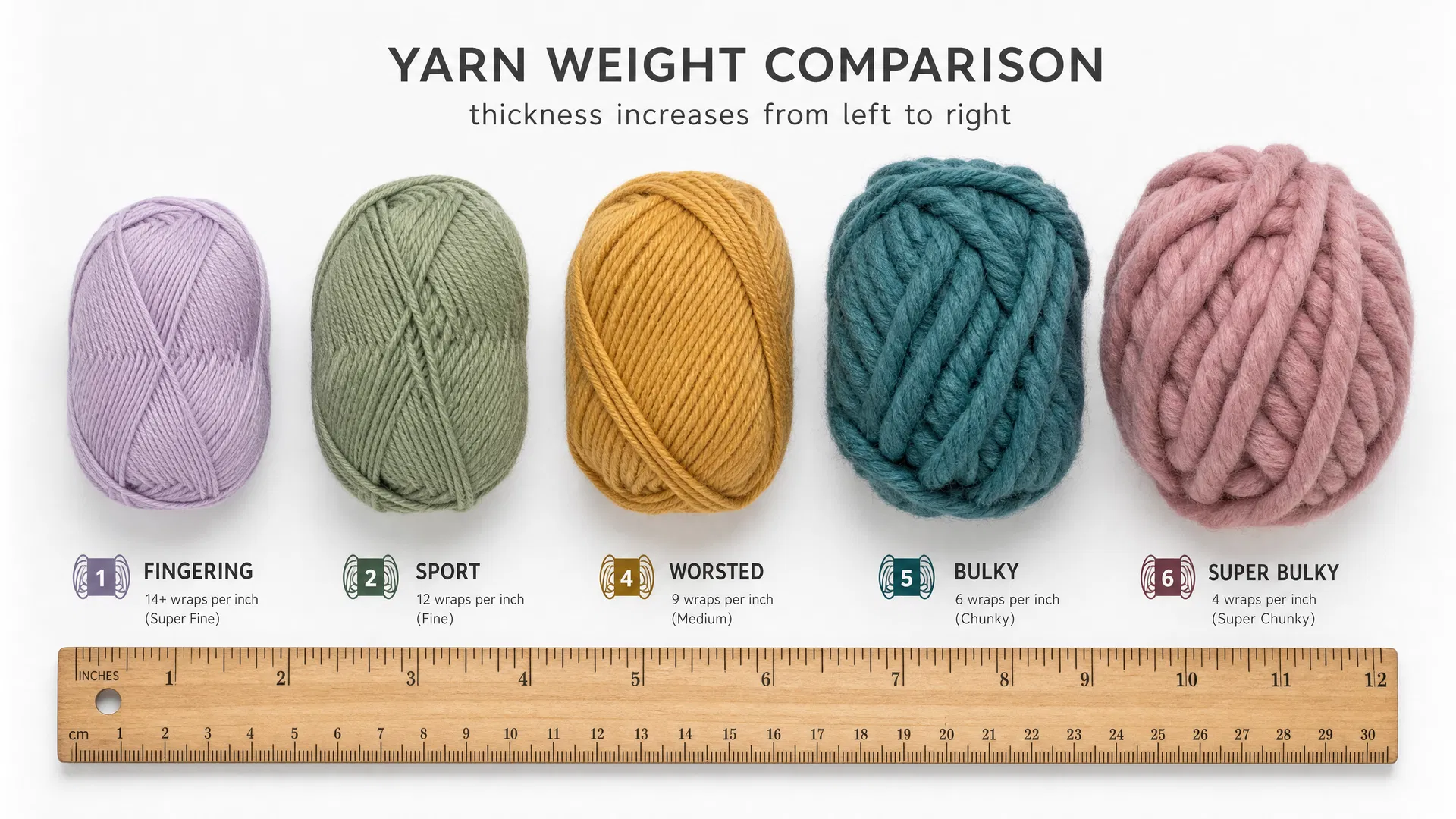
What Is Yarn Weight?
Yarn weight refers to the thickness of the yarn strand. It is one of the most important factors in choosing yarn for a project, because it determines your needle size, gauge, and the drape of your finished piece.
The Standard Weight Categories
| Weight | Also Called | Needle Size | Gauge (10cm) | Best For |
|---|---|---|---|---|
| 0 - Lace | Thread, Cobweb | 1.5-2.25mm | 32-40 sts | Lace shawls, doilies |
| 1 - Super Fine | Fingering, Sock | 2.25-3.25mm | 27-32 sts | Socks, lightweight shawls |
| 2 - Fine | Sport, Baby | 3.25-3.75mm | 23-26 sts | Baby clothes, light jumpers |
| 3 - Light | DK, Light Worsted | 3.75-4.5mm | 21-24 sts | Jumpers, cardigans, blankets |
| 4 - Medium | Worsted, Aran | 4.5-5.5mm | 16-20 sts | Jumpers, hats, scarves |
| 5 - Bulky | Chunky | 5.5-8mm | 12-15 sts | Quick knits, winter accessories |
| 6 - Super Bulky | Super Chunky | 8mm+ | 7-11 sts | Arm knitting, chunky blankets |
How to Read a Yarn Label
Every ball band tells you the recommended needle size and tension. Look for:
- Weight category number (0-6)
- Recommended needle size (in mm)
- Tension square (stitches and rows per 10cm)
- Meterage/yardage (how much yarn is in the ball)
Substituting Yarn Weights
Sometimes a pattern calls for a yarn that is discontinued or unavailable. You can substitute with a different yarn of the same weight category, but always knit a tension square first.
Key rules for substitution:
- Match the weight category
- Match the fibre content if possible (wool for wool, cotton for cotton)
- Knit a tension square and adjust needle size if needed
- Calculate total meterage needed, not number of balls
Our Substitution Tool [blocked] makes this process easy. Enter the yarn your pattern calls for, and we will suggest alternatives from our range with matching weight, fibre, and gauge.
Which Weight Should Beginners Choose?
DK (weight 3) or Aran (weight 4) are ideal for beginners. They are thick enough to see your stitches clearly, work up at a satisfying pace, and are versatile enough for most projects.
Wraps Per Inch (WPI)
If you have mystery yarn with no label, wrap it around a ruler. Count how many wraps fit in one inch:
- 14+ wraps = Fingering/Sock
- 12 wraps = Sport
- 9 wraps = DK/Worsted
- 6 wraps = Bulky/Chunky
- 4 wraps = Super Bulky
Understanding yarn weights opens up a world of pattern possibilities. Once you know your weights, you can confidently tackle any pattern and make smart substitutions when needed.